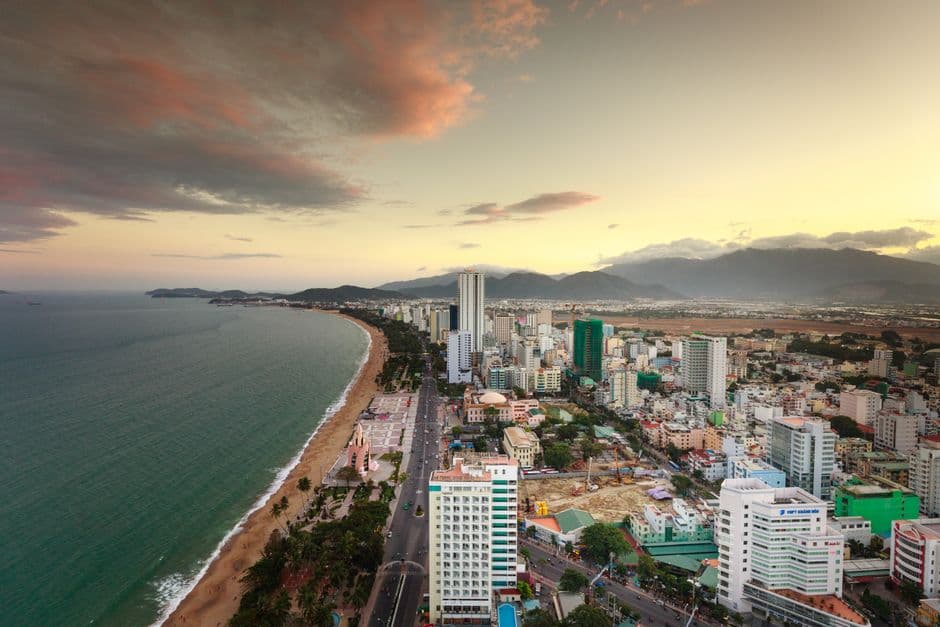
If you remember only one thing, make it this: come in the dry season, which runs roughly January to August, and aim for February to May if your dates are flexible. Those spring months give you almost everything at once. Days are warm and sunny, in the high 20s. The sea is calm and glassy, visibility is excellent for diving and island trips, and the crowds have not yet built up to summer levels.

That said, "best" really depends on what you're after. A budget traveller chasing cheap beachfront rooms, a diver hunting clear water, and a family tied to school holidays will each land on a different window. Here's a month-by-month breakdown so you can match the season to your trip. Since most visitors fly into Cam Ranh (CXR), there's also a quick word at the end on what that means for your first day.

Dry season vs. rainy season

Nha Trang has its own weather pattern, noticeably different from Hanoi in the north or Ho Chi Minh City in the south. The city sits on Vietnam's south-central coast and runs on two simple gears.

The dry season (about January–August) is the longer and more reliable of the two. Expect plenty of sunshine, low rainfall, and warm air. February is typically the driest month, with only 40–50 mm of rain. This is when Nha Trang is at its best: blue skies, swimmable water, and dependable conditions for boat tours.

The rainy season (about September–December) is driven by the northeast monsoon that sweeps the central coast. Rain ramps up sharply in October and November. November is the wettest month of the year, averaging around 330 mm, with October close behind. Showers in the shoulder weeks can be brief, but the heart of this season brings genuine multi-day wet spells, heavier seas, and a real risk of localised flooding. Typhoons are most likely from early September into early December, so this is the season to watch the forecast closely and keep your plans flexible.

How hot does it get? Peak heat

Nha Trang is warm all year. Average lows sit around 24°C and highs around 30°C across the calendar. The cooler edge of the dry season, roughly mid-January to March, is the most comfortable for walking around, with highs in the high 20s and pleasant humidity.

The real heat arrives in June to August, when highs climb to about 31–33°C and the sun is at full strength. It's superb for the water but not so kind to midday sightseeing. Plan your beach time for early and late in the day, and save indoor attractions or a shaded café for the hottest hours.

Best months for the beach & island trips

For getting in the water, nothing beats the dry season. From February to May the sea is at its calmest, especially in the early morning when the four-island boat tours set out. Operators report very few weather-related cancellations in this window. Visibility for snorkelling and diving is excellent, often quoted at 15–20 metres and improving as summer approaches.

Divers in particular tend to favour March through August (into September), when the water is warmest and clearest. So if scuba or snorkelling is the main reason for your trip, you can push your window a little later into the warm months. Just expect more company and more heat. The rainy-season months, by contrast, churn up the sea and cloud the water, which is why dive operators wind down toward the year's end.

Wherever you stay, much of the best swimming is just south of the city around Bãi Dài's long sandy stretch, close to the airport. See our notes on Bai Dai & resort transfers if you're basing yourself out there rather than in town.

Crowds, festivals & Tết

Two different crowds shape Nha Trang's calendar. The international high seasons lean on winter: Russian, Korean and Chinese visitors are a strong presence through the cooler months and into spring, which is part of why the city has such a distinct, international feel along the beachfront. The domestic peak is summer, June to August, when Vietnamese families travel for school holidays and they're joined by European, Australian and Russian holidaymakers. Beaches are busiest then, and room rates are highest, with hotels often charging 20–30% above spring prices.

Then there's Tết, the Vietnamese Lunar New Year, which falls in late January or February. The weather is lovely and the festive atmosphere is genuine, but it triggers a domestic travel surge. Airfares and hotels hit their peak, and some museums and indoor attractions close for the first few days of the holiday. If your dates land on Tết, book early and treat the first couple of days as relaxed beach time rather than a packed itinerary.

The quietest and cheapest window is the rainy season, September to December, when visitor numbers drop sharply and four-star beachfront rooms can be found at close to half their peak rates. The savings are substantial. You just pay for them in weather.

Month-by-month quick guide

PeriodWeather / SeaCrowdsVerdict
Feb–MayWarm (~28–30°C), sunny, dry; calm, clear seaModerate; spikes at TếtBest overall — the sweet spot
Jun–AugHottest (~31–33°C), clearest waterPeak (summer holidays)Great for the water, busy & pricier
Sep–DecRainy, rough sea; heaviest Oct–Nov; typhoon riskLowestCheapest, but gamble on weather

Frequently asked questions

What is the overall best time to visit Nha Trang?

The dry season, January to August, is the best stretch overall, and February to May is the sweet spot. Those months bring warm, sunny days around 28–30°C, calm and clear water for swimming and island tours, and lighter crowds than the summer peak.

When is the rainy season in Nha Trang, and is it worth visiting then?

The rainy season runs roughly September to December, with the heaviest rain in October and November (November averages about 330 mm). It is the wettest and lowest-priced period, with some flooding and typhoon risk on the central coast. It can still be worthwhile for budget travellers who don't mind grey skies and a flexible plan.

What are the hottest months in Nha Trang?

June to August are the warmest, with highs around 31–33°C and peak sunshine. The sea is at its clearest and warmest, which is great for swimming and water sports, but this is also the busiest domestic holiday season and hotel prices rise.

Should I avoid Nha Trang during Tết (Vietnamese New Year)?

Tết falls in late January or February and brings a festive atmosphere, but also a domestic travel surge, peak airfares and hotel rates, and short closures of some museums and indoor attractions during the first few days. The weather is excellent, so it's a trade-off rather than a strict no.

Whenever you come, your trip starts at Cam Ranh International Airport (CXR), about 35 km south of the city along the coast. It's a straightforward run — see getting from Cam Ranh Airport to Nha Trang for your options, where to stay near the airport if you land late, and what to do on a layover if you've only got a few hours between flights.

About the author

Linh Pham is a Nha Trang-based travel editor covering Cam Ranh International Airport and visiting the Khánh Hòa coast.

This is an independent airport guide, not affiliated with the official airport. Weather is approximate (June 2026) — check the forecast before you travel.